
ERUA Science Cafés
Bridging the Gap between Science and Society
ERUA Science Cafés
“Bridging the Gap between Science and Society”
The ERUA Alliance is hosting a series of e-Science Café events designed to engage various stakeholders including students, citizens, scientists, community leaders, activists, policy actors, and science enthusiasts, can indeed serve as a starting point for engaging discussions between students, citizens, scientists, community leaders, activists, policy makers, science enthusiasts, and others.
These events serve as a springboard for meaningful discussions with a focus on sustainable campuses and resilient societies – exploring potential solutions for a more sustainable, beautiful, and promising future across 3 key areas:
- Green Mobility and Waste
- Social and Cultural Diversity, Inclusion, and Cohesion
- Entrepreneurial Diversity
By encouraging critical thinking and fostering intercultural dialogue, these e-Science Café events aim to play a significant role in raising awareness and promoting collaborative efforts towards a sustainable future, and achieving social change in campuses, neighbourhoods, communities, societies and regions.
Save the Dates
1st ERUA e-Science Café, September 18, 2023: Moving forward together in Sustainable Campuses and Societies: Zero to Travel – Zero to Waste (Discussion and Interaction: Green Mobility and Waste)
2nd ERUA e-Science Café, October 2, 2023: Moving forward together in Sustainable Campuses and Societies: Zero to Travel – Zero to Waste (Policy Creation and Activities: Green Mobility and Waste)
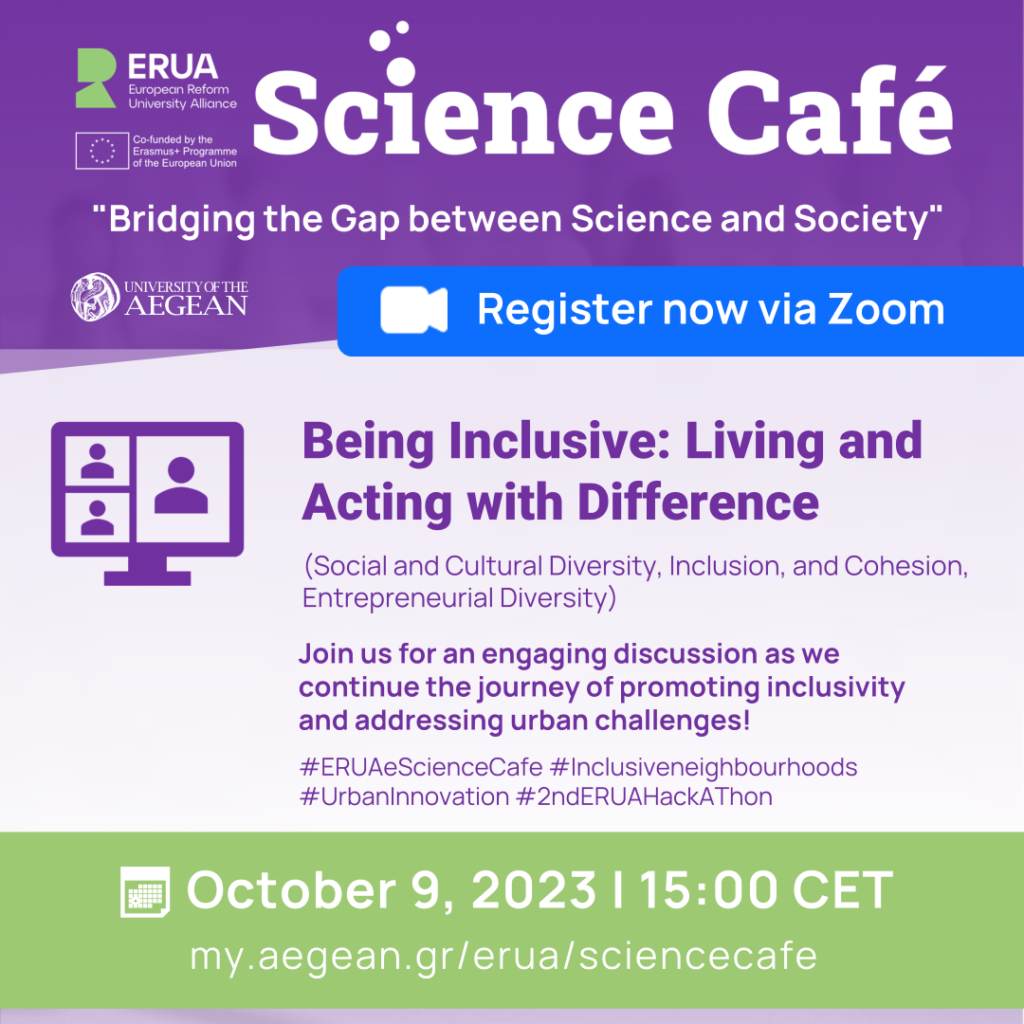
3rd ERUA e-Science Café, October 9, 2023: Being Inclusive: Living and Acting with Difference (Social and Cultural Diversity, Inclusion, and Cohesion, Entrepreneurial Diversity)
Indicative Scientific Agenda – Topics for Discussion
Sustainability Waste Travel Inclusion DiversityLatest Science Café Events
1st ERUA e-Science Café, September 18, 2023: Moving forward together in Sustainable Campuses and Societies: Zero to Travel - Zero to Waste (Discussion and Interaction) 
Can you imagine a world without the wonders of nature, where the absent of clean air, pure water, and the fading melodies of life evokes a sense of loss and longing?
In such a state, where nature is abused, overexploited, and turned into a desolate wasteland — a desolation that we would never willingly be embraced as our chosen dwelling place.
You can download the referenced document:
“The ERUA Protocol for the achievement of the 2030 Agenda”
Moving forward together in Sustainable Campuses and Societies: Zero to Travel
- What does green mobility mean and why is it essential for sustainable transportation? Discuss the environmental impacts of traditional transportation methods and the need to transition towards greener alternatives.
- What are the benefits of electric vehicles? Discuss advancements in EV technology, including greenhouse gas emissions and air pollution reduction, infrastructure requirements, and government incentives to promote their adoption.
- What is the importance of well-designed, public transportation systems? Discuss strategies for improving public transportation networks, including the integration of electric buses, trains, and trams.
- What are the benefits of active transportation in terms of health, reduced traffic congestion, and minimized carbon footprint? Discuss active transportation, encourage the promotion of walking, cycling, and other non-motorized modes of transportation.
- How can shared mobility services contribute to reducing the number of private vehicles and improve overall transportation efficiency? Discuss of shared mobility, such as carpooling, ride-sharing services, and bike-sharing programs.
- How can smart transportation optimize transportation networks and reduce energy consumption? Discuss the role of technology in advancing green mobility. Highlight innovations such as intelligent transportation systems, real-time traffic management, and smart parking solutions that can optimize transportation networks and reduce energy consumption
- Engagement and Behaviour Change: discuss the importance of community engagement and promoting behavioural adaptation towards greener transportation choices. Share strategies for raising awareness, providing education, and incentivizing sustainable transportation habits.
Suggest Ideas for action
- Bicycle (& Walk) Infrastructure: Invest in well-designed bike lanes, bike racks, and secure bike storage facilities on campus. Encourage students, faculty, and staff to use bicycles or walking as a primary mode of transportation by providing convenient and safe infrastructure.
- Vehicle sharing Programs:
- Bike-Sharing Programs: Implement a bike-sharing program where students and staff can borrow bicycles for short-term use.
- Electric Scooter Sharing: Explore the possibility of implementing electric scooter sharing programs, allowing students and staff to use electric scooters for short distances
- Carpooling Services: Establish carpooling services or platforms to connect students and staff that live in the same area or commute on similar routes.
- Shuttle Services: Implement electric shuttle services to provide convenient transportation within the campus.
- Parking Policies: Implement preferential parking for carpooling vehicles, electric vehicles, and bikes. Offer incentives such as reduced parking fees or prime parking spots to encourage sustainable transportation choices.
- Education and Awareness: Conduct awareness campaigns and educational programs to promote sustainable transportation choices. Organize events, workshops, or competitions that focus on sustainable mobility and highlight the benefits of green transportation options.
- Incentives and Rewards: Introduce incentive programs for sustainable commuting, such as reward points or discounts at on-campus facilities for individuals who use sustainable transportation modes.
Moving forward together in Sustainable Campuses and Societies: Zero to Waste
Talking about Refuse (to consume-to buy), Reduce, Reuse, Recycle
- How can we understand our everyday activities that produce wastes and impact our environment? Which wastes can we reduce in our daily lives? Can we define specific challenges and barriers when trying to reduce waste? How can we deal with them?
- Can you show/present 5 best practices of reusing common material and / or products that you are willing to apply in your home / community and encourage others to participate?
- What are the key principles of effective recycling a personal point of view? How can we improve recycling infrastructure and accessibility in our communities? How can we raise awareness about the importance of the 4Rs?
- What are some successful examples of waste reduction programs or policies in municipalities / campuses and communities? How we can connect universities and communities to collaborate and implement effective waste management policies, strategies and services?
- What role can young people play in advocating for the 4Rs and driving positive change in waste management? Voluntary approaches-only cannot bring behavioural change about the 4R attitudes.
Suggest Ideas for action
Actions within the Campus:
- Implementing recycling programs and providing convenient recycling bins across the campus.
- Promoting the use of reusable bottles, cups, and containers by providing water stations and encouraging refillable options in campus cafes and dining areas.
- Creating awareness campaigns and educational programs on waste reduction and the 4Rs (Refuse, Reduce, Reuse, Recycle) specifically targeted to students, faculty, and staff.
- Partnering with local sustainable businesses to provide eco-friendly and plastic-free options in campus shops, cafes, and vending machines.
Actions in the Local Community:
- Organizing beach and park clean-ups in collaboration with local community organizations and residents.
- Advocating for sustainable packaging practices amongst local businesses, such as encouraging the use of biodegradable or compostable materials and minimizing single-use plastics.
- Collaborating with local schools, community centers, and organizations to promote waste reduction campaigns, non-plastic days/weeks, and educational initiatives.
Moderator: Spyros Bofylatos Tutor (Research) at Royal College of Arts | Researcher in Sustainability, Social Innovation, CoDesign, and Disruptive Practices | Fostering Dialogue
Date/Time: September 18, 2023 | 15:00-17:00 (CET) / 16:00-18:00 (EET/Athens time)
Interested in attending this session?
[Event Completed]
— via Zoom Meetings platform
You can watch below or click here (via YouTube) for the recording of the Event
Please click below or here to open Padlet in a new window
2nd ERUA e-Science Café, October 2, 2023: Moving forward together in Sustainable Campuses and Societies: Zero to Travel - Zero to Waste (Policy Creation and Activities)
Can you imagine a world without the wonders of nature, where the absent of clean air, pure water, and the fading melodies of life evokes a sense of loss and longing?
In such a state, where nature is abused, overexploited, and turned into a desolate wasteland — a desolation that we would never willingly be embraced as our chosen dwelling place.
You can download the referenced document:
“The ERUA Protocol for the achievement of the 2030 Agenda”
Moving forward together in Sustainable Campuses and Societies: Zero to Travel
- What does green mobility mean and why is it essential for sustainable transportation? Discuss the environmental impacts of traditional transportation methods and the need to transition towards greener alternatives.
- What are the benefits of electric vehicles? Discuss advancements in EV technology, including greenhouse gas emissions and air pollution reduction, infrastructure requirements, and government incentives to promote their adoption.
- What is the importance of well-designed, public transportation systems? Discuss strategies for improving public transportation networks, including the integration of electric buses, trains, and trams.
- What are the benefits of active transportation in terms of health, reduced traffic congestion, and minimized carbon footprint? Discuss active transportation, encourage the promotion of walking, cycling, and other non-motorized modes of transportation.
- How can shared mobility services contribute to reducing the number of private vehicles and improve overall transportation efficiency? Discuss of shared mobility, such as carpooling, ride-sharing services, and bike-sharing programs.
- How can smart transportation optimize transportation networks and reduce energy consumption? Discuss the role of technology in advancing green mobility. Highlight innovations such as intelligent transportation systems, real-time traffic management, and smart parking solutions that can optimize transportation networks and reduce energy consumption
- Engagement and Behaviour Change: discuss the importance of community engagement and promoting behavioural adaptation towards greener transportation choices. Share strategies for raising awareness, providing education, and incentivizing sustainable transportation habits.
Suggest Ideas for action
- Bicycle (& Walk) Infrastructure: Invest in well-designed bike lanes, bike racks, and secure bike storage facilities on campus. Encourage students, faculty, and staff to use bicycles or walking as a primary mode of transportation by providing convenient and safe infrastructure.
- Vehicle sharing Programs:
- Bike-Sharing Programs: Implement a bike-sharing program where students and staff can borrow bicycles for short-term use.
- Electric Scooter Sharing: Explore the possibility of implementing electric scooter sharing programs, allowing students and staff to use electric scooters for short distances
- Carpooling Services: Establish carpooling services or platforms to connect students and staff that live in the same area or commute on similar routes.
- Shuttle Services: Implement electric shuttle services to provide convenient transportation within the campus.
- Parking Policies: Implement preferential parking for carpooling vehicles, electric vehicles, and bikes. Offer incentives such as reduced parking fees or prime parking spots to encourage sustainable transportation choices.
- Education and Awareness: Conduct awareness campaigns and educational programs to promote sustainable transportation choices. Organize events, workshops, or competitions that focus on sustainable mobility and highlight the benefits of green transportation options.
- Incentives and Rewards: Introduce incentive programs for sustainable commuting, such as reward points or discounts at on-campus facilities for individuals who use sustainable transportation modes.
Moving forward together in Sustainable Campuses and Societies: Zero to Waste
Talking about Refuse (to consume-to buy), Reduce, Reuse, Recycle
- How can we understand our everyday activities that produce wastes and impact our environment? Which wastes can we reduce in our daily lives? Can we define specific challenges and barriers when trying to reduce waste? How can we deal with them?
- Can you show/present 5 best practices of reusing common material and / or products that you are willing to apply in your home / community and encourage others to participate?
- What are the key principles of effective recycling a personal point of view? How can we improve recycling infrastructure and accessibility in our communities? How can we raise awareness about the importance of the 4Rs?
- What are some successful examples of waste reduction programs or policies in municipalities / campuses and communities? How we can connect universities and communities to collaborate and implement effective waste management policies, strategies and services?
- What role can young people play in advocating for the 4Rs and driving positive change in waste management? Voluntary approaches-only cannot bring behavioural change about the 4R attitudes.
Suggest Ideas for action
Actions within the Campus:
- Implementing recycling programs and providing convenient recycling bins across the campus.
- Promoting the use of reusable bottles, cups, and containers by providing water stations and encouraging refillable options in campus cafes and dining areas.
- Creating awareness campaigns and educational programs on waste reduction and the 4Rs (Refuse, Reduce, Reuse, Recycle) specifically targeted to students, faculty, and staff.
- Partnering with local sustainable businesses to provide eco-friendly and plastic-free options in campus shops, cafes, and vending machines.
Actions in the Local Community:
- Organizing beach and park clean-ups in collaboration with local community organizations and residents.
- Advocating for sustainable packaging practices amongst local businesses, such as encouraging the use of biodegradable or compostable materials and minimizing single-use plastics.
- Collaborating with local schools, community centers, and organizations to promote waste reduction campaigns, non-plastic days/weeks, and educational initiatives.
Moderator: Spyros Bofylatos Tutor (Research) at Royal College of Arts | Researcher in Sustainability, Social Innovation, CoDesign, and Disruptive Practices | Fostering Dialogue
Date/Time: October 2, 2023 | 15:00-17:00 (CET) / 16:00-18:00 (EET/Athens time)
Interested in attending this session?
— via Zoom Meetings platform
You can watch below or click here (via YouTube) for the recording of the Event
Please click below or here to open Padlet from the 1rst Science Café event
3rd ERUA e-Science Café, October 9, 2023: Being Inclusive: Living and Acting with Difference Address Local Challenges
We explore the Urban Neighborhood at Saint-Denis, Paris
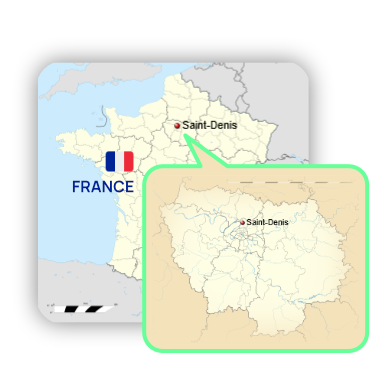
Learn more about Saint-Denis, Paris Information_for_Saint-Denis__Paris.pdf
This event serves as a springboard for creative discussions leading to the 2nd #ERUAHackAThon from October 17 to 19, 2023, at Paris8 University.
Find more for the 2nd #ERUAHackAThon CALL_2nd_ERUA_HackAThon_Paris.pdf
AGENDA of the 2nd #ERUAHackAThon erua.aegean.gr/erua-hackathon/agenda
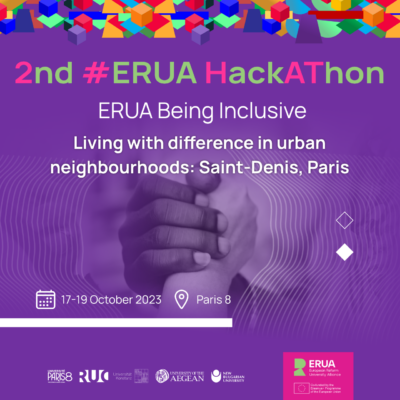
In ERUA we interest in promoting inclusive and sustainable neighborhoods
We look for collaborative solutions for urban neighborhoods, challenging ideas from interdisciplinary teams of students, citizens, residents, NGOs, community organizations, entrepreneurs, and policy makers.
Address Local Challenges
Challenge #1
Inclusive Urban Mobility: The neighborhood as a key to promote sustainable mobility.
“Uniting Neighborhoods through Inclusive Mobility Solutions”
We reimagine transportation to meet the needs of all individuals within cities.
We need to rethink urban mobility, supporting an ecological transition for all vulnerable populations: elderly and people with disabilities, as well those who might face financial constraints in purchasing electric cars, or buying bicycles, personal scooters and accessing alternative means of transportation.
We want to create
- inclusive communities where everyone can easily access essential services, education, employment, and recreational opportunities.
- networks of transit systems that connect different parts of the neighborhood and offer diverse transportation options, that are easier for people to choose sustainable modes of travel that best suit their needs
Challenge #2
Nature Inclusive Neighborhoods
“Embracing the Beauty of Nature in Our Neighborhoods”
Nature inclusive neighborhoods, also known as nature-based neighborhoods or green neighborhoods, are residential areas designed to integrate nature and green spaces into the urban fabric. These neighborhoods encompass diverse natural and semi-natural areas, including forests, wide range of flora and fauna meadows, gardens, small-scale farming plots, green roofs, and bodies of water. Moreover, they play a central role in the cultural life of the community, offering recreational opportunities, spaces for relaxation, educational activities, and the chance to connect with nature for nearby residents. Access to green urban spaces promotes physical and mental health, creates feelings of safety, contributes to higher rates of employment and income in the area, and results in long-term benefits such as reductions in health care costs and energy consumption.
Key words: Green infrastructures, easy access to nature, urban agriculture, biodiversity, community engagement
Challenge #3
Celebrating Cultural Diversity: Embracing Inclusion in Neighborhoods
Embracing diversity and inclusion of cultural expressions is a transformative approach to building a cohesive and harmonious society that values the richness of human diversity. This collective process involves actively promoting and supporting the diverse cultural identities, practices, and traditions of neighborhood residents. It encompasses various forms of cultural manifestations, such as arts, music, literature, dance, theatre, crafts and more, representing the unique identities, values, beliefs, and traditions of individual with different backgrounds. The goal is to create an inclusive and welcoming community where everyone’s cultural contributions are celebrated.
Key words: Diverse cultural events and festivals, inclusive Public Spaces, cultural exchanges, challenging stereotypes, spaces for open dialogue and respectful conversations.
Challenge #4
Diverse Entrepreneurs: Collaboration, Innovation, Diversity, and Inclusion in Entrepreneurship
Neighborhoods characterized by socio-economic deprivation and cultural diversity offer a unique platform for fostering creative, cultural, and social entrepreneurship, driving economic growth, innovation, and social impact.
Social capital plays a vital role in entrepreneurship, facilitating connections and collaborations within reliable networks. However, not all entrepreneurs have equal access to crucial resources such as mentorship, funding, and role models, leading to disparities in opportunities. There exists a notable disparity in funding, with a disproportionate share going to white male entrepreneurs, while women entrepreneurs and entrepreneurs of colour are underrepresented in major incubator and accelerator programs.
Key words: equal opportunities, dynamic diverse entrepreneurial community, social innovation, creativity, underrepresented groups, community well-being, job creation, social enterprises, non-profit organizations, creative business models, sustainable practices, alternative financing
Date/Time: October 9, 2023 | 15:00-17:00 (CET) / 16:00-18:00 (EET/Athens time)
Interested in attending this session?
— via Zoom Meetings platform
You can watch below or click here (via YouTube) for the recording of the Event
Please click below or here to open Padlet in a new window
Join Event
Register via ZoomInformation you provide when registering will be shared with the account owner and host and can be used and shared by them in accordance with our Privacy Policy.
Follow us on social media!
- ERUA UAegean Group on Facebook
- ERUA Alliance on Facebook
- ERUA Alliance on LinkedIn
- Webpage ERUA
- Subscribe to the ERUA newsletter
- ERUA UAegean on YouTube
Actors





Our Panelists
Our invited panelists and moderators to Science Cafés

Spyros Bofylatos
Tutor (Research) at Royal College of Arts
Design Products MA Tutor at RCA | Researcher in Sustainability, Social Innovation, CoDesign, and Disruptive Practices | Fostering Dialogue
Ioannis Katsounis
Dr and Researcher at University of the Aegean
Department of Shipping, Trade and Transport (STT) – School of Business, University of the Aegean, Greece

Demetris Lekkas
Associate Professor at University of the Aegean
Environmental Engineering and Science Sector – School of Environment, University of the Aegean, Greece

Eleni Gaki
Associate Professor at University of the Aegean
Dept. of Business Administration – School of Business, University of the Aegean, Greece

Athanasia Orfanou
PhD Candidate at University of the Aegean
Dept. of Environment – School of Environment, University of the Aegean, Greece

Nikoleta Krousouloudi
PhD Candidate at University of the Aegean
Department of Shipping, Trade and Transport (STT) – School of Business, University of the Aegean, Greece

Eleni Zarimi
PhD Candidate and Researcher at University of the Aegean
Department of Financial and Management Engineering – Polytechnic School, University of the Aegean, Greece